Material Research and Development

Boost your thermal spray cylinder bore coating process

Discover RotaPlasma™ HS1, our thermal spray product for high-speed thermal spray cylinder bore coating

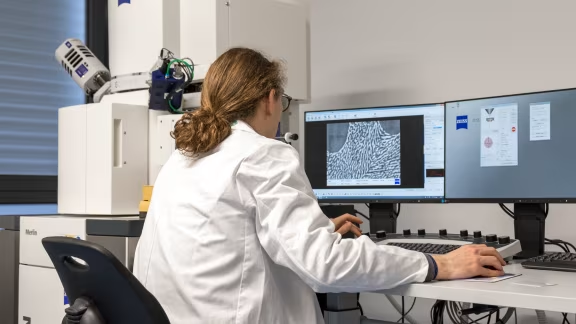
At Oerlikon Metco, Material Research and Development (R&D) is at the heart of our innovation strategy. Our expert team is dedicated to pioneering advanced materials, including those shaped through powder metallurgy, to deliver unmatched performance across industries worldwide. As a global leader in surface solutions, we combine cutting-edge technology with deep industry expertise, pushing the boundaries of material science and design to meet the evolving needs of our customers.

Driving Performance and Advancing Industries

Through continuous innovation, we create advanced materials and coatings that enhance product performance, reliability, and efficiency. Our technologies—often refined through powder metallurgy—help our customers achieve higher durability, energy efficiency, and competitive advantage in their industries.

At Oerlikon Metco, we foster a culture of creativity, collaboration, and excellence. By delivering tailored solutions and setting new technological benchmarks, we empower clients to remain at the forefront of their markets. Our materials and coatings are engineered to help you stay ahead of the curve.

At Oerlikon Metco, Material Research and Development (R&D) is at the heart of our innovation strategy. Our expert team is dedicated to pioneering advanced materials, including those shaped through powder metallurgy, to deliver unmatched performance across industries worldwide. As a global leader in surface solutions, we combine cutting-edge technology with deep industry expertise, pushing the boundaries of material science and design to meet the evolving needs of our customers.

Our R&D Capabilities

Innovative Material Discovery

We focus on developing new materials and combinations with enhanced performance characteristics. Our research includes advanced ceramic materials and alloy optimization for better performance in challenging environments.

Testing & Evaluation

We conduct extensive evaluations to assess material behavior under real-world conditions—focusing on temperature, pressure, and corrosive environments

Process Development

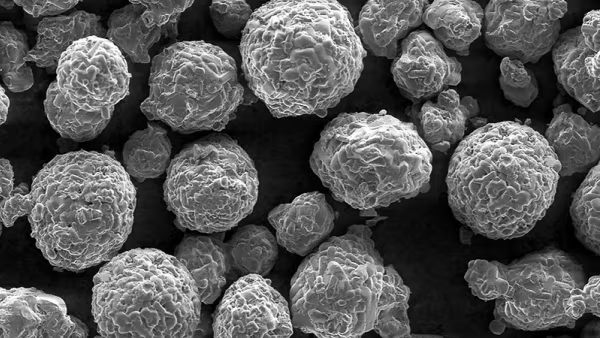
We refine manufacturing processes (spray drying, atomization, sintering, crushing, cladding and spheroidization) to optimize material production, ensuring both quality and scalability.

What is Advanced Materials R&D?

Materials R&D encompasses discovering new materials, improving existing ones, and developing advanced manufacturing techniques. Our goal is to provide solutions that address evolving industry needs through innovation, high performance, and sustainability.

Advanced Materials Development

Our Research & Development (R&D) team is at the cutting edge of advanced materials innovation, working relentlessly to develop new materials that not only meet but exceed the performance demands of today’s most challenging environments. Our team specializes in high-performance alloys, advanced composites, and ceramic materials engineered to thrive under extreme conditions. By focusing on improving material properties such as strength, durability, and resilience, we ensure our solutions deliver long-lasting reliability, even in the most demanding applications.

Tailored Alloys for Extreme Environments

Our advanced alloys are designed to perform under conditions that push the limits of material science. Whether it’s the intense heat of aerospace engines, the corrosive environments of chemical processing, or the wear and tear in heavy machinery, we create high-strength, corrosion-resistant alloys that stand up to the toughest challenges. We focus on:

  • High-temperature alloys for gas turbines, automotive engines, and aerospace applications.
  • Corrosion-resistant alloys for marine, chemical, and oil & gas industries.
  • Wear-resistant alloys designed for components exposed to abrasive environments, such as manufacturing tools and mining equipment.

Our alloys are engineered to not only withstand high stresses and extreme temperatures but also to maintain integrity and performance over time, reducing the need for frequent replacements and lowering operational costs.


Unique Properties with Advanced Composite Materials

We develop advanced composite materials that combine the best properties of metals, ceramics, and polymers to provide enhanced strength-to-weight ratios and high-performance characteristics. These materials are ideal for applications where lightweight and high-strength properties are essential, such as in aerospaceautomotive, and electronic components. Our composites are engineered to deliver:

  • Improved thermal stability and resistance to thermal expansion.
  • Superior mechanical strength without compromising on weight.
  • Enhanced thermal conductivity and electrical properties for specialized applications, such semiconductors and thermal management materials.

These materials are tailor-made to meet the specific demands of each sector, providing our clients with customized solutions that help them gain a competitive edge in performance and efficiency.

High-Performance Ceramic Materials for Harsh Conditions

Our advanced ceramic materials are engineered to withstand the most extreme conditions, such as high temperaturesabrasive wear, and corrosive environments. Ceramics are uniquely suited for applications where traditional metals or polymers fail, especially in industries like aerospace, automotive, and electronics. Key attributes of our ceramics include:

  • Exceptional heat resistance, making them ideal for high-temperature applications like thermal barriersinsulation, and engine components.
  • High hardness and abrasion resistance for use in cutting tools, wear-resistant coatings, and components subject to extreme mechanical stresses.
  • Electrical insulation and high dielectric strength for use in electronicssemiconductors, and high-voltage components.

By tailoring the chemical composition and microstructure of our ceramics, we can optimize their properties to provide the ultimate protection against wear, corrosion, and high thermal cycling, leading to extended component life and reduced downtime.

Innovation Through Powder Metallurgy

Our expertise in powder metallurgy plays a crucial role in the development of these materials, allowing us to design precisely engineered powders that enhance material properties during processing. Whether it’s for Thermal spray or Additive manufacturing, our powder-based solutions offer:

  • Improved material consistency and reduced porosity, enhancing both mechanical strength and durability.
  • The ability to create complex geometries and customized material structures that traditional manufacturing techniques can’t achieve.
  • Enhanced material properties such as hardnessductility, and thermal stability, tailored to meet the specific needs of industries like aerospace, automotive, and electronics.

By leveraging powder metallurgy techniques, we can create innovative, high-performance materials with complex designs that are lightweight, durable, and cost-effective.

Collaborative Development for Custom Solutions

We understand that every industry and application has its unique challenges. That’s why we don’t just create materials—we collaborate closely with our clients to develop tailored material solutions that address their specific needs. Whether it’s a new alloy to withstand extreme temperatures or a composite to meet lightweight demands, our team works hand-in-hand with you to ensure the materials we develop provide the highest level of performance, durability, and reliability for your application.

Our development process involves:

  1. In-depth analysis of your requirements and challenges.
  2. Material selection based on mechanical, thermal, and chemical properties.
  3. Prototype development and testing to ensure that materials meet or exceed performance specifications.
  4. Scalable manufacturing to ensure that the custom solution can be produced efficiently and cost-effectively.

1. Current Overseas Procurement Status of Thermal Spray Powders

With the global expansion of surface protection manufacturing, more factories in Southeast Asia, Europe and Middle East choose to import thermal spray alloy and ceramic powders from Chinese professional manufacturers. Compared with local European and American brands, Chinese spray powder has obvious cost-performance advantages, complete material grades and customized production capability. However, cross-border procurement involves logistics, inspection, parameter matching and after-sales service links, most foreign purchasers make repeated mistakes during bulk purchasing, causing production delay and extra cost loss.
“Cross-border powder procurement is not price purchasing, but a complete match of parameters, packaging, logistics and after-sales technical support.” — International Industrial Material Procurement Alliance

1.1 Core Advantages of Chinese Thermal Spray Powder Supply

  • Complete material series: nickel-based, cobalt-based, ceramic, cermet composite powder one-stop supply
  • Low customized threshold: support small batch trial order, formula adjustment for special working conditions
  • Stable batch quality: standardized atomization production, strict impurity control for export-grade powder
  • Complete export certification: meet MSDS, REACH, factory inspection report for customs clearance

2. Six Typical Cross-border Powder Procurement Mistakes

2.1 Wrong Parameter Matching Mistakes

2.1.1 Neglect Spray Equipment Adaptability

Many purchasing staff only confirm powder material grade, ignoring particle size matching with local spraying machines. Plasma spray, HVOF and cold spray equipment require exclusive powder particle size range. Mismatched particle size will lead to powder blockage, low spraying efficiency and poor coating compactness.
  1. HVOF equipment: Applicable particle size 20-53μm spherical powder
  2. Plasma spraying equipment: Applicable particle size 45-105μm alloy powder
  3. Cold spraying equipment: Applicable ultra-fine 10-30μm high-fluidity powder

2.2 Packaging & Logistics Mistake Comparison Table

Procurement Link
Wrong Operation
Standard Export Operation
Potential Risk
Outer Packaging
Ordinary plastic bag bulk packing
Aluminum foil vacuum sealed + moisture-proof carton
Powder agglomeration during sea shipping
Customs Document
Incomplete MSDS component file
Full set of English inspection & customs files
Customs detention, cargo return
Warehousing Storage
Unmarked production batch number
Clear batch, production date and validity mark
Unable to trace quality problems

3. Standard Cross-border Procurement Process Recommended By SunSpray

3.1 Complete 5-step Order Confirmation Process

  1. Submit working condition sheet: confirm service temperature, corrosive medium, spraying equipment model
  2. Obtain official powder parameter sheet and English certification documents
  3. Purchase trial sample powder for on-site spraying test verification
  4. Confirm export packaging method, shipping term and delivery cycle
  5. Arrange bulk shipment, provide full customs clearance documents and after-sales docking

3.2 Unnecessary Cost Waste in Procurement

3.2.1 Avoidable Extra Expense

  • Buy high-grade cobalt-based powder for ordinary room-temperature anti-wear parts
  • Choose air freight for large-batch conventional powder, increasing logistics cost
  • Cooperate with trading companies without factory technical after-sales support
  • Ignore seasonal humidity, purchase non-moisture-proof powder for rainy-region factories

4. How To Choose Reliable Export Spray Powder Supplier

A qualified export-oriented thermal spray powder manufacturer must balance product stability, document completeness, cross-border logistics experience and global technical service capability. Price shall not be the first evaluation standard for long-term cooperative suppliers. Stable coating effect and zero customs risk can greatly reduce hidden operating costs for manufacturing enterprises.

4.1 Core Qualification Screening Standards

  1. Independent atomization production workshop, not outsourced processing products
  2. Able to issue English batch test report, REACH and environmental compliance certificate
  3. Equipped with overseas technical team, support online spraying parameter debugging
  4. Support batch powder reserved sample, guarantee consistent quality for repeat orders
As a professional export manufacturer focusing on thermal spray powder, SunSpray has served more than 400 overseas manufacturing enterprises. We provide one-stop cross-border procurement solutions including powder matching, document sorting, export packaging and after-sales technical guidance, helping global clients avoid procurement pitfalls, cut material cost and stabilize spraying production quality sustainably.

Driving Performance and Advancing Industries

Through continuous innovation, we create advanced materials and coatings that enhance product performance, reliability, and efficiency. Our technologies—often refined through powder metallurgy—help our customers achieve higher durability, energy efficiency, and competitive advantage in their industries.

At Oerlikon Metco, we foster a culture of creativity, collaboration, and excellence. By delivering tailored solutions and setting new technological benchmarks, we empower clients to remain at the forefront of their markets. Our materials and coatings are engineered to help you stay ahead of the curve.

A Powerhouse of Thermal Spray Materials

As an example, if we take a 0.5 m diameter part which we want to atmospheric plasma spray, then our starting point surface speed should be 75 m/min with a suggested step height of 5 mm (see Figure 3). To set up the manipulation to provide a controlled deposition process, we should rotate the part at: 75 ÷ (π · 0.5) ≅ 48 RPM, and traverse the gun over the surface at: 48 · (5 ÷ 60) = 4 mm/s.

Figure 6: Simple weave patter schematic.

Abradable Seals for Compressors and Low/High Pressure Turbines

OEMs in the aerospace market seek for solutions to maintain the maximum sealing efficiency across all turbine stages — for the widest range of…

Read more

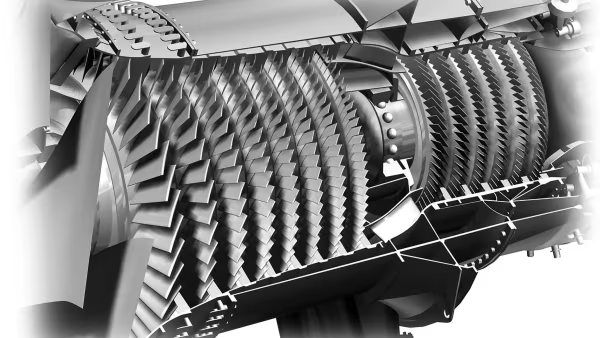
Combustion Chamber and Applications

In the Gas Turbine Combustion Chamber fuel burns at temperatures of 2000 °C (3630 °F) and more. And that figure is constantly rising, because…

Read more

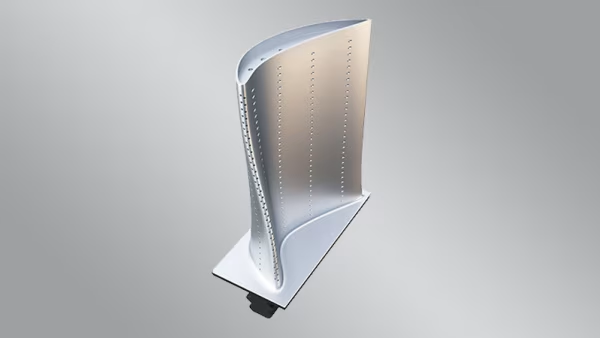
Turbine vanes and blades

In aerospace, turbine vanes and blades play a critical role in the operation of jet engines, which power commercial and military aircraft. These…

Read more

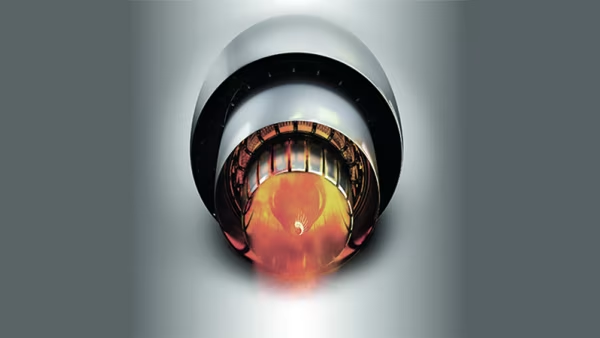
Afterburners

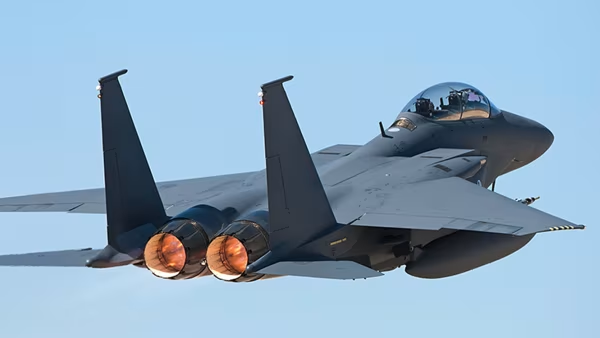
For military applications, afterburners help supersonic aircraft to rapidly increase thrust on demand by burning additional fuel in a combustor…

Read more

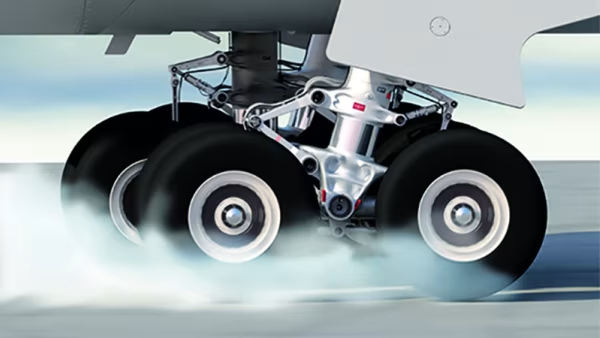
Landing Gears and Internal Engine Components

Oerlikon Metco develops surface solutions for vital aircraft systems, such as the hydraulic cylinders, seals of landing gear components (big and…

Read more

Abradable materials for coating critical surfaces

Abradable coating solutions improve safety while reducing fuel consumption and emissions in turbomachinery. Whether aviation or power generation…

Read more

Components & Assemblies for Aero Engines & Gas Turbines

Read more
Read more

Increasing Aircraft Fuel Efficiency for a More Sustainable Aviation Industry

Coating material

Material Class Example Composition Characteristics Example Application
Pure metals Zn Corrosion protection Bridge application
Self-fluxing alloys FeNiBSi High hardness, fused, minimal porosity Shafts, bearings
Steel Fe 13Cr Economical, wear resistance Repair
MCrAlY NiCrAlY High temperature, corrosion resistance Gas turbine blades
Nickel-graphite Ni 25C Anti-fretting Compressor inlet ducts
Oxides Al2O3 Oxidation resistance, high hardness Textile industry
Carbides WC 12Co Wear resistance Shafts
Process Flat Component Cylindrical Component
Minimum Surface Speed Step Height Minimum Surface Speed Step Height
Air Plasma Spray 60 5 75 5
HVOF-GF 60 4 75 4
Electric Arc Wire Spray 45 15 45 15
Combustion Powder Spray 45 10 45 10
Combustion Wire Spray 45 15 45 15

Manipulating the results in thermal spray

Why go to all that effort of moving the gun and/or the component? Of course, we want to make sure we deposit the coating where we want it, but we also need to produce an even coating thickness as well as a controlled thickness per pass.

RPM = VR1 ÷ (π · D)

  • RPM - revolutions per minute (n[min-1])
  • VR1 = surface speed (m/min)
  • D = diameter (m)

VTR = RPM · (LST ÷ 60)

  • VTR = traverse speed (mm/s)
  • RPM = revolutions per minute
  • LST = step height (mm)
×

Tell Us Your Needs. We'll Get Back Within 12 Hours

Share your application and performance targets. Our technical team will provide the most suitable recommendation and support.