


1. Oxide ceramic powder
Oxide ceramic powders are among the most important feedstocks used in thermal spraying. During spraying, the powders are heated to a molten or semi-molten state, accelerated toward a prepared substrate, and rapidly solidified to form a protective or functional coating. Common oxide ceramic materials include alumina Al2O3, titania TiO2, chromia Cr2O3, zirconia ZrO2, yttria-stabilized zirconia (YSZ), and alumina–titania blends. These materials are used to provide wear resistance, corrosion resistance, electrical insulation, thermal insulation, and surface protection in demanding environments.[oerlikon][inframat]
Core Materials and Functions
Alumina is a widely used oxide ceramic because of its high hardness, electrical insulation, and abrasion resistance. It is suitable for components exposed to abrasive wear, electrical stress, or high surface loading. Alumina–titania blends improve toughness, coating density, and machinability compared with pure alumina.
Chromia provides excellent sliding-wear resistance, a relatively low friction coefficient, and good chemical and oxidation resistance. It is commonly selected for sealing surfaces and rotating components. YSZ is the most important thermal barrier ceramic because it combines a high melting point, low thermal conductivity, and suitable phase stability under thermal cycling. YSZ containing approximately 7–8 wt% yttria remains the industrial benchmark for thermal barrier coatings on gas-turbine components.[sciencedirect][haydencorp]
Key Characteristics and Advantages
Oxide ceramic powders offer high hardness, temperature capability, oxidation resistance, chemical stability, and electrical insulation. They allow lower-cost metallic substrates to achieve specialized surface performance without manufacturing an entire component from expensive bulk ceramic material.
Alumina–titania coatings are wear resistant, relatively dense, and suitable for grinding and polishing. Chromia is effective in friction, sealing, and chemically demanding applications. YSZ reduces the temperature experienced by metallic hot-section components. Key limitations include ceramic brittleness, thermal-expansion mismatch between coating and substrate, and porosity or microcracking inherent in many lamellar thermal spray coatings.[haydencorp][thermalspray]
Typical Applications
- Wear protection for pumps, valves, shafts, rollers, guides, textile components, and mechanical seals
- Corrosion- and erosion-resistant surfaces in chemical-processing and fluid-handling equipment
- Electrical insulation on housings, rollers, heating elements, and electrical components
- Thermal barrier coatings on turbine blades, vanes, combustors, and hot-gas-path parts in aerospace and power generation
- Wear, friction, and thermal-protection layers for automotive engine, exhaust, and drivetrain components
Atmospheric plasma spray is the most widely used process for oxide ceramics. Suspension plasma spray, solution precursor plasma spray, and plasma spray–PVD are gaining importance for producing fine, columnar, and controlled-porosity thermal barrier structures.[link.springer]
Future Prospects
Future development will focus on nanostructured and hierarchical powders, dense or deliberately porous functional coatings, multilayer and graded architectures, and digitally monitored processes. Advanced thermal barrier materials—including rare-earth zirconates and high-entropy oxides—are being developed to improve high-temperature stability, lower thermal conductivity, and resistance to aggressive deposits.[link.springer][cordis.europa]
Oxide ceramic powders are also expected to expand into hydrogen systems, solid oxide fuel cells, electrolyzers, power electronics, solar-thermal equipment, and sensor-integrated smart coatings.
| ID Number | SY-100 |
|---|---|
| Name | Oxide Ceramic Powder |
| Composition | Oxides of metallic elements and their complexes of different components, compounds |
| Purity Grade | 95%~99.95% |
| Processing Method | Oxides of metallic elements and their complexes of different components, compounds |
| Particle Size Range (μm) | 10~70 |
| Powder Type | Oxide Ceramic Powders |
| Morphology | Solid-state powder |
| Apparent Density (g/cm³) | 3~5 |
| Hall Flow Rate (s/50g) | 20~30 |
| Recommended Process | Atmospheric Plasma Spraying (APS) and High-Velocity Oxygen-Fuel (HVOF) |
| Operating Temperature | 1000~3000 |
| Click on Image for more Info | ID Number | Name | Add to Basket |
|---|---|---|---|
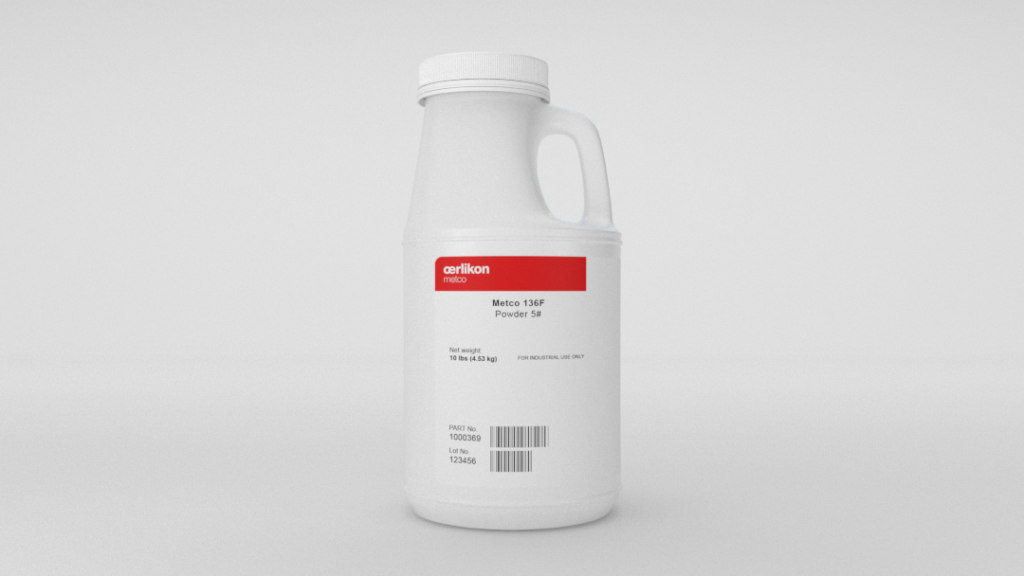
|
SY-111-998-4515 | Pure Alumina Powders 99.95 -45~+15 | |
|
|
SY-111-9995-7438 | Pure Alumina Powders 99.95 -74~+38 | |
|
|
SY-111-9995-3010 | Pure Alumina Powders 99.95 -30~+10 | |
|
|
SY-111-998-7438 | Pure Alumina Powders 99.8 -74~+38 | |
|
|
SY-111-998-4515 | Pure Alumina Powders 99.8 -45~+15 | |
|
|
SY-111-995-3010 | Pure Alumina Powders 99.5 -30~+10 | |
|
|
SY-111-998-3010 | Pure Alumina Powders 99.8 -30~+10 | |
|
|
SY-111-995-4515 | Pure Alumina Powders 99.5 -45~+15 | |
|
|
SY-111-995-7438 | Pure Alumina Powders 99.5 -74~+38 |